Turmeric from our farm
Boiled, sun-cured,
ground cool on stone.
Grown without synthetic fertilisers or pesticides, cured by boiling and drying in the sun, then ground slowly on a stone chakki in small lots, so it keeps its colour and aroma.
Shop turmeric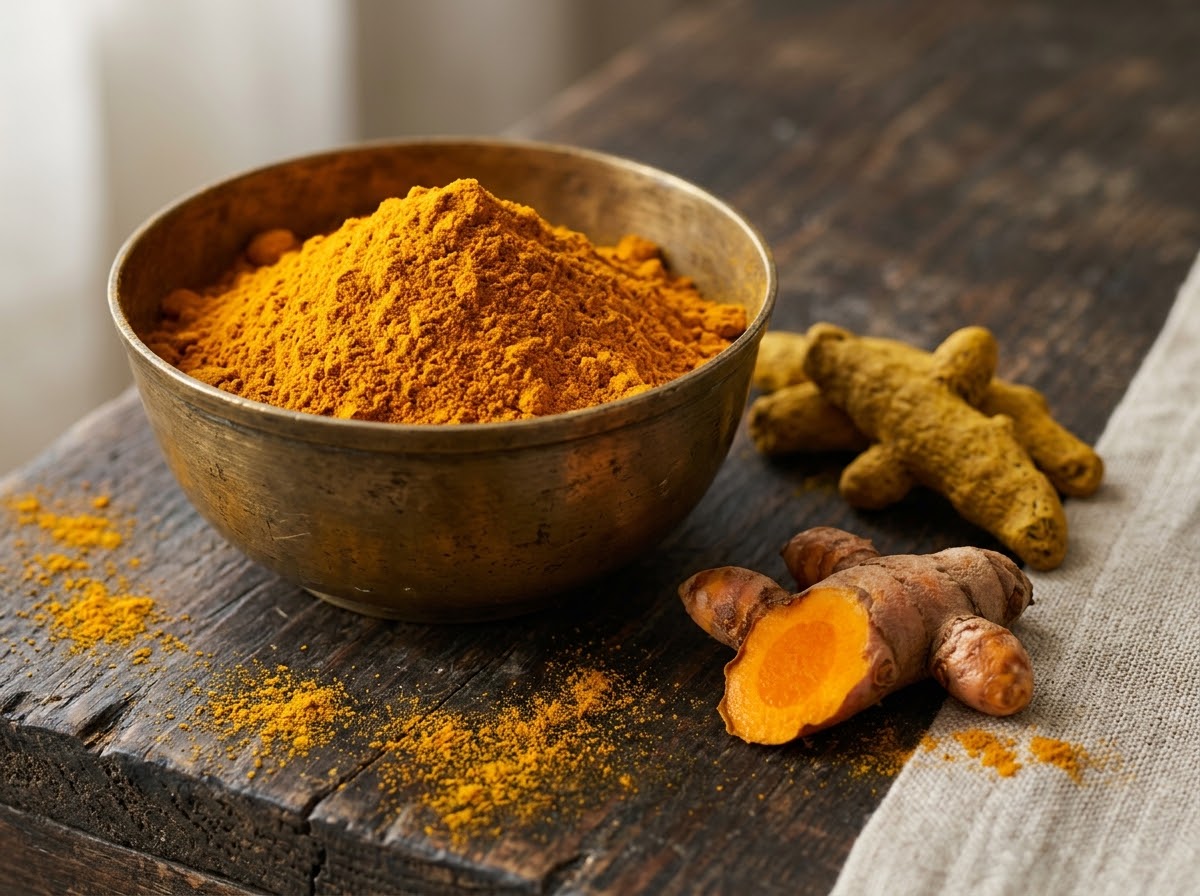
Buy
Stone-ground turmeric
-
Stone-ground Turmeric Powder
- Grown without synthetic fertilisers or pesticides
- Boiled and sun-cured after harvest
- Slow stone-ground at low temperature, in small lots
From ₹149 MRP ₹175 15% off ₹1.49/g
-
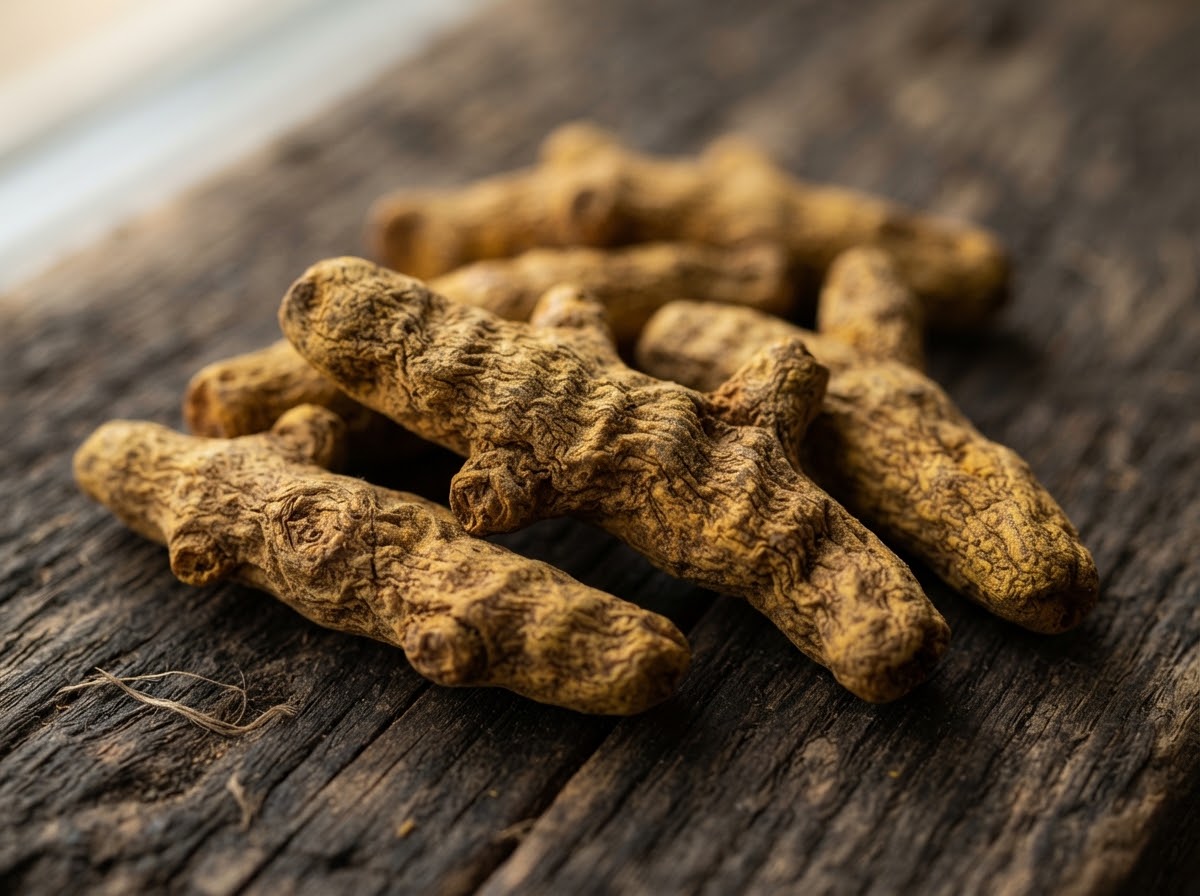
Whole Dried Turmeric Fingers
- Grown without synthetic fertilisers or pesticides
- Boiled and sun-cured after harvest
- Cured by boiling and sun-drying, a method used in India for generations
From ₹299 MRP ₹349 14% off ₹1.20/g
From field to jar
A year in the field
Lifted at maturity
We dig the rhizomes once the leaves have yellowed and dried down, about nine months after planting.
Boiled
The fingers are boiled until just soft. This sets the colour and lets them dry evenly, right through to the core.
Sun-cured
They dry in the sun for around two weeks, turned every day, until they snap cleanly.
Stone-ground, slowly
Small lots go through a stone chakki at a slow pace, so the powder stays cool and holds on to more of its aromatic oil.
Packed with its batch
Every pack carries a batch code and packed-on date, so you always know which lot you are cooking with.
Why the grinding matters
Stone-ground vs high-speed milled
| Aspect | Our stone chakki | High-speed mill |
|---|---|---|
| Grinding pace | Slow, small lots | Fast, built for volume |
| Heat in the powder | Stays cool to the touch | Friction can heat the powder |
| Aromatic (volatile) oil | Ground cool to keep more of it | Heat can drive some of it off |
| Aroma and taste | Warm, earthy, lingering | Often milder once oil is lost |
| Texture | Fine and soft | Very fine and uniform |
| Traceability | Batch code on every pack | Large blended lots |
Much of turmeric’s aroma sits in its volatile oil. Heat during grinding is one of the ways that oil is lost, which is why we grind slowly and keep the powder cool.
What's in turmeric
- Why boil turmeric?
- Boiling the rhizomes soon after harvest softens them, sets the colour and lets them dry evenly instead of spoiling from the inside.
- What is curcumin?
- The yellow pigment in turmeric. How much a lot contains depends on the variety, the soil and the curing, which is why we have ours tested.
- Why grind it cool?
- Turmeric’s aroma comes largely from its volatile oil. A slow stone chakki keeps the powder cool, so less of that oil is lost.
How to use it
- Bloom ¼–½ tsp in hot ghee or oil for a few seconds before adding onions, for dal, sabzi or curry.
- Stir a pinch into warm milk with a little black pepper and jaggery for haldi doodh.
- Rub onto fish, paneer or potatoes with salt and chilli before frying or roasting.
- Start small: stone-ground turmeric is aromatic, and a little colours a whole pot.
Recipes: Haldi doodh (turmeric milk) · Konkan-style masoor khichdi with Karjat 3 rice · Red rice vegetable pulao
Questions
Frequently asked
Powder or whole fingers: which should I buy?
Powder is ready to cook with. Whole fingers keep their aroma longer and let you grind small amounts as you need them. Many people keep both.
Is anything added to the powder?
No. The only ingredient is turmeric: no added colour, starch or anti-caking agent.
Where can I see the lab results?
Each product page shows the lab report for the batch on sale as soon as it is uploaded, with the batch code that is printed on your pack.
Do you ship across India?
Yes. Orders are packed at our Mumbai unit and shipped by courier to most pincodes in India.
Cured in the sun, ground slowly on stone, packed in small lots.